
 How-to
7 Steps to Handle Late Rent and Protect Your Rental Income
Last Updated: November 4, 2026
Quick Summary
To handle late rent, check your lease for the due date, grace period, and late fee, then send a short written reminder stating the amount owed and a clear payment deadline. If payment does not arrive, escalate to a formal Virginia late rent notice, which as of July 1, 2026 must give 14 days.
- Only 85.2% of renters pay on time, so roughly one in seven payments arrives late.
- Nearly 60% of landlords use a grace period before charging a late fee.
- Late fee caps typically fall between 4% and 12% of monthly rent.
- Effective July 1, 2026, Virginia nonpayment notices must give 14 days, up from 5.
- About 42% of renters who incur one late fee incur another the following month.
Table of Contents
- Start With a Late Rent Reminder, Not a Fight
- Check the Lease and the Landlord Tenant Rent Payment Agreement
- Send a Late Rent Reminder Letter to Tenant That Holds Up
- Know When a Virginia Late Rent Notice Is Required
- Document Every Payment, Promise, and Conversation
- Build a Late Rent Escalation Workflow by Problem Type
- Use Landlord Rent Collection Best Practices to Prevent Repeat Late Payments
- Avoid Lockouts, Shutoffs, and Retaliation
- Hand Off Late Rent Collections to Abrams Realty
- Frequently Asked Questions
Start With a Late Rent Reminder, Not a Fight
Late rent is common. According to ZipReports industry data on on-time payment rates, only 85.2% of renters pay on time, which means roughly one in seven payments arrives late. How you handle that first missed payment shapes everything that follows.
A late rent policy is the written set of rules in a lease that defines when rent is due, how long a grace period runs, and what happens when a payment misses the deadline. Clear rules protect the landlord-tenant relationship and keep a small problem from becoming a legal one.
The first move matters most. A short reminder beats a formal notice almost every time. Nearly 60% of landlords use a grace period before charging a fee, and about one in five open with a reminder rather than a penalty, according to RentRedi's data on on-time rent payment practices.
This guide from Abrams Realty walks through seven steps, from the first reminder to the final handoff. Each step reflects how Virginia rules actually work.
Check the Lease and the Landlord Tenant Rent Payment Agreement
The lease is the source of truth. Before sending anything, read it.
The landlord tenant rent payment agreement is the section of the lease that sets the due date, the grace period, the late fee, and the accepted payment methods. If that language is vague, enforcement gets messy.
Look for four things:
- The exact due date and whether a grace period applies
- The late fee amount and when it kicks in
- Where and how rent must be paid
- What notice the tenant agreed to receive
Late fee caps typically fall between 4% and 12% of monthly rent, per Tenant Ledger's review of late fee structures. Virginia law governs what a lease can charge, so confirm the current rule with a qualified attorney before setting or raising a fee.
If the lease is silent on late fees, do not invent one mid-lease. Fix the language at renewal instead.
Send a Late Rent Reminder Letter to Tenant That Holds Up
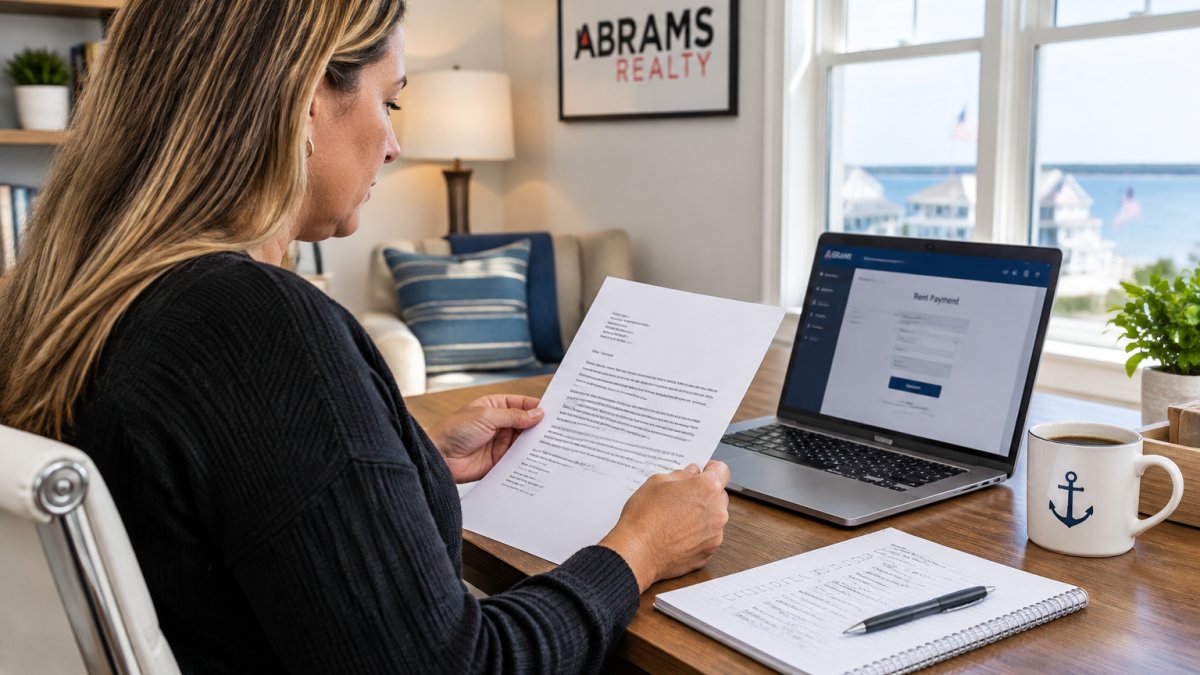
A reminder works best when it is short, neutral, and specific. No accusations. No threats.
A late rent reminder letter to tenant is a written message that states the amount due, the original due date, the current balance, and a clear payment deadline. Keep a copy in the tenant file.
Use this template:
Dear [Tenant Name],
This is a reminder that rent for [month] in the amount of $[amount] was due on [date]. As of today, the balance is $[amount].
Please submit payment by [date] using [payment method]. If payment has already been sent, thank you and please disregard this notice.
If there is a problem you would like to discuss, contact [name] at [phone] or [email].
Sincerely, [Landlord or manager name]
Send it the same way every month. Email and portal messages create a timestamp. A phone call does not, so follow any call with a written summary.
Watch out: a reminder that mixes in threats or personal comments becomes evidence against you later. Keep every message factual.
Know When a Virginia Late Rent Notice Is Required
A reminder is a courtesy. A formal notice is a legal step, and Virginia sets the rules.
A Virginia late rent notice is the written demand that starts the nonpayment process under the Virginia Residential Landlord and Tenant Act. It must state the amount owed and the deadline to pay or vacate.
The deadline changed recently. Effective July 1, 2026, Virginia requires notices for nonpayment of rent to give 14 days, up from 5, according to Virginia Realtors' summary of the new notice law. Landlords should update every template to match.
What the notice must contain. At minimum, the tenant's name, the property address, the amount owed, the date the notice was served, the deadline to pay or vacate, and the signature of the person serving it. Leave out unrelated complaints. A notice that mixes in other issues can be challenged.
How to serve it. Virginia law allows several service methods, and the method matters if the case reaches court. Common permitted methods include personal delivery, posting on the premises plus mailing, and delivery to a person of suitable age at the residence. Confirm the current permitted methods with counsel or the DHCD forms before serving, and keep proof of service for every method used.
What happens after the deadline. If the tenant pays in full within the cure period, the notice is satisfied and the case ends. If the tenant does not pay, the landlord may proceed to file an unlawful detainer action in the general district court with jurisdiction over the property. Filing fees, hearing dates, and local procedures vary by court, so verify current requirements with the clerk or counsel.
The court sequence, in plain terms. After filing, the tenant is served with the summons and complaint, a hearing is scheduled, and both sides present evidence. If the court finds for the landlord, a judgment for possession may follow, and the actual removal of the tenant requires a writ of possession executed by the sheriff. Do not skip steps or attempt self-help removal at any point.
Two practical notes:
- Serve the notice the way the statute allows, and keep proof of service.
- Do not combine a pay-or-quit notice with unrelated complaints.
Rules change. Confirm the current requirement with counsel or the DHCD forms before serving anything.
Document Every Payment, Promise, and Conversation
Documentation is the difference between a judge siding with you and a judge siding with the tenant. Start a file the day the lease is signed.
Keep a communication log with:
- Date and time of every contact
- Who said what, in one or two lines
- The method used: call, text, email, portal, or letter
- Any promise made and whether it was kept
Then keep the paper trail:
- Signed lease and every addendum
- Payment ledger showing each charge and credit
- Copies of every reminder and notice, with delivery proof
- Screenshots of portal messages and texts
- Photos of any property damage, dated
- Notes from any phone call, written the same day
A common mistake is relying on memory. Memory fades; a log does not. If a case ever reaches court, the log becomes the story you can prove.
Build a Late Rent Escalation Workflow by Problem Type
Not every late payment means the same thing. A tenant who is two days late after two years of on-time payments is a different problem from a tenant who is late every month. The gap most guides leave is the decision path between the first reminder and a formal notice, so use this workflow to match the response to the pattern. Matching reminders and formal notices to a tenant’s payment pattern also means keeping deposit decisions separate from rent enforcement, a distinction PPS Property Management can help clarify.
Step 1: Classify the miss. Before you send anything, answer three questions: Is this the first late payment or a repeat? Is the tenant communicating? Is the amount partial or full? Those three answers route the file.
| Problem type | First response | If it repeats |
|---|---|---|
| First late payment, good history | Reminder message with a clear deadline | Written notice at next miss |
| Recurring late payments | Review due date and payment method | Revise lease terms at renewal |
| Partial payment | Written payment plan with dates | Formal notice if plan breaks |
| No contact after reminder | Phone call, then written notice | Serve Virginia notice |
| Property damage plus nonpayment | Document with photos | Separate the issues, then act |
Step 2: Send the right message for the classification. A reminder is a courtesy; a notice is a legal step. Keep them separate. For a first miss, a short message works: "Hi [Tenant], rent for [month] posted as unpaid as of today. The balance is $[amount]. Please submit payment by [date] through [method], or let me know if there is an issue we should discuss." For a repeat miss, move to the written notice described in the next section rather than sending another reminder.
Step 3: Set a decision date, not a feeling. Give every file a date on which you will escalate if nothing changes. A common pattern is to escalate after the grace period ends and one written reminder has gone unanswered. Write that date in the file so the decision is not made in frustration.
Step 4: Separate money problems from conduct problems. Nonpayment, property damage, and repeated lease violations have different remedies and different evidence. Do not bundle them into one notice. If a tenant is both late and damaging the property, document the damage separately and handle nonpayment on its own timeline.
Step 5: Know when to stop escalating and hand off. If the tenant has stopped communicating, the balance is growing, or the situation involves threats or safety concerns, that is the point to involve counsel or a property manager rather than send a stronger letter.
The Consumer Financial Protection Bureau found that about 42% of renters who incur one late fee incur another the following month, based on its analysis of rental housing delinquency data. That pattern is the signal to change the system, not just send another reminder.
When a late payment turns into a broader conflict, handling difficult tenants in Virginia Beach without legal missteps covers the next layer of steps.
Use Landlord Rent Collection Best Practices to Prevent Repeat Late Payments
Prevention beats collection. Most repeat late payments trace back to a process gap, not a bad tenant.
Landlord rent collection best practices that reduce late payments:
- Set rent due on a date that matches payday
- Offer automatic ACH or portal payments
- Send a reminder three days before the due date
- Keep the same due date and method every month
- Charge fees consistently, never selectively
- Review payment history at every renewal
Automation is the biggest lever. Platforms increasingly push automated collection because it removes the human delay that causes most late payments, per Pendo Rent's analysis of collection automation.
One honest limitation: automation does not fix a tenant who cannot pay. It only removes excuses from a tenant who can.
A common mistake is waiving fees informally for one tenant and enforcing them for another. That inconsistency weakens every future notice.
Avoid Lockouts, Shutoffs, and Retaliation
Some responses are illegal, no matter how frustrated a landlord feels.
A lockout is changing the locks, removing doors, or blocking access to keep a tenant out without a court order. In Virginia, self-help evictions of this kind are not allowed. Neither is shutting off utilities to force payment.
Retaliation is the other trap. After a tenant complains about habitability or requests a repair, any adverse action can look retaliatory. Keep repair requests and rent collection in separate files, and never let one influence the other.
Fair housing rules apply to every step. Apply the same late fee policy to every tenant, every time.
Older renters are a group to watch. About 8.9% of renters age 65 and older reported trouble paying rent in 2025, per the Urban Institute's research on older adult renters. A payment plan may serve everyone better than a fast legal filing.
When in doubt, call an attorney before acting. A wrongful lockout can cost far more than the rent owed.
Hand Off Late Rent Collections to Abrams Realty
Collection gets harder when a portfolio grows or an owner lives out of state. That is the point to consider professional help.
Abrams Realty manages rental properties in Virginia Beach and Hampton Roads, and can take on the collection process when owners need it.
Owners weighing the decision can review what professional property management in Virginia Beach involves before committing. Those ready to delegate can follow steps for hiring local property management experts and start with a clear list of questions.
Owners facing a difficult tenant situation can review Abrams Realty's landlord rescue and eviction help options.
Pricing depends on the property and the scope of work, so request a current quote from Abrams Realty.
Frequently Asked Questions
Can a landlord charge a late fee for late rent in Virginia?
Yes, if the lease allows it. Virginia law requires the late fee to be stated in the lease, and it must be reasonable in relation to the rent. Your lease terms and current Virginia code control. Review the exact wording with a Virginia attorney before enforcing a fee, and apply it the same way to every tenant so you do not create a fair housing or retaliation problem.
How long should a landlord wait before contacting a tenant about late rent?
Contact the tenant the day after rent is due if your lease sets a due date with no grace period. Nearly 60% of landlords use a grace period before charging a fee, according to RentRedi, and 25% charge immediately. Whatever your lease says, send a friendly late rent reminder as soon as the due date passes. Early contact resolves most problems before they become a Virginia late rent notice.
What notice does a landlord need to give for unpaid rent in Virginia?
Virginia changed the nonpayment notice period to 14 days effective July 1, 2026, according to Virginia Realtors. Update every notice template to reflect the 14-day requirement. The Virginia DHCD 2026 sample forms include both 14-day and 30-day options, with the 30-day version for certain HUD-subsidized tenancies. Confirm the correct form for your property with a Virginia attorney before serving notice.
What should a landlord do if a tenant cannot pay rent on time?
Talk to the tenant first and find out whether the shortfall is temporary. The CFPB reports that 42% of renters who incur a late fee fall behind again the next month, so a written payment plan matters more than a one-time waiver. Put any agreement in writing, set clear dates, and document each payment. If the tenant misses the plan, move to formal notice. Abrams Realty's landlord rescue service can take over collections if the situation keeps repeating.
Late rent is a process problem before it is a legal one. The landlords who collect reliably are the ones who remind early, document everything, and follow Virginia's notice rules to the letter. Abrams Realty can take that process off an owner's plate, with documented collections, tenant communication, and eviction support handled by a local team. Get started with Abrams Realty and put a consistent late rent process behind every rental in the portfolio.