 How-to
7 Steps to Finding Off-Market Homes in 2026
Last Updated: November 10, 2026
Quick Summary
Off-market homes are properties for sale that are not publicly listed on the Multiple Listing Service or major consumer portals. They are typically found through pocket listings, direct owner sales, or wholesale and distressed deals. The most reliable way to find them is working with a local agent like Abrams Realty, who runs additional layers of search and uses tools most individual buyers cannot access, rather than waiting for listings to surface.
- Define a written buy box covering budget, property type, target areas, and must-haves first.
- Work with a local agent like Abrams Realty who actively searches pocket listings and tracks upcoming private sales, instead of waiting for them to appear.
- Use a short, respectful outreach script and follow up once or twice over several weeks.
- Network with investors, lenders, inspectors, and title professionals who hear about deals early.
- Complete due diligence before any offer, including title, tax, permit, flood, and inspection checks.
Table of Contents
- What Off-Market Homes Are and Why They Matter in 2026
- Step 1: Set Your Buy Box and Search Criteria
- Step 2: Work With a Local Agent Who Knows Pocket Listings
- Step 3: Search Public Records for Real Estate Investors
- Step 4: Build Your Off-Market Property Owner Outreach Script
- Step 5: Network With Investors and Industry Professionals
- Step 6: Run Off-Market Property Due Diligence Before You Offer
- Step 7: Assess Whether the Price Is Actually a Deal
- Start Your Off-Market Home Search With Abrams Realty
- Frequently Asked Questions
What Off-Market Homes Are and Why They Matter in 2026
Off-market homes are properties that are for sale but not publicly listed on the Multiple Listing Service or major consumer portals. Owners may sell privately, through a referral, or after a direct conversation with an agent or investor. For buyers in Virginia Beach and Hampton Roads, this means less competition and sometimes more room to negotiate, but finding these homes takes more than waiting: buyers who work with a local agent like Abrams Realty get the benefit of additional layers of search and tools most individual buyers do not have.
Knowing where these private opportunities come from is the first step toward finding them in 2026.
Off-market sales generally come from three sources:
- Pocket listings: Agents privately market a property to their own buyer network.
- Direct owner sales: Owners who prefer not to list publicly sell directly.
- Wholesale and distressed deals: Investors contract properties and assign them to buyers.
Step 1: Set Your Buy Box and Search Criteria
Before contacting anyone, define exactly what you want. A buy box is a written set of criteria, such as price range, property type, neighborhood, and minimum condition. Clear criteria let you recognize a good opportunity quickly.
Write down these items:
- Maximum budget: Include down payment, closing costs, and reserves.
- Property type: Single-family, townhome, condo, or multi-unit.
- Target areas: Specific Virginia Beach neighborhoods or nearby communities.
- Must-haves: Bedrooms, lot size, garage, or accessibility features.
A focused buy box makes every conversation with an agent or seller more productive. Compare real estate investment strategies to decide which property types and goals your buy box should target.
Step 2: Work With a Local Agent Who Knows Pocket Listings
Off-market opportunities rarely reach buyers who simply wait and hope. A real estate agency like Abrams Realty gives you an active edge: agents run additional layers of searches, tap networks other buyers cannot reach, and use tools most buyers never see. Learn what to look for in choosing a capable local agent before you rely on one to find private listings. A capable agent, like the team at Abrams Realty, tracks upcoming sales, understands neighborhood pricing, and can tell you when a pocket listing matches your criteria, instead of leaving you to stumble onto opportunities on your own.
When you interview agents, ask:
- How often do you hear about private listings in my target area?
- How do you keep my buy box current as my needs change?
- What is your process for reviewing an off-market property before I offer?
Step 3: Search Public Records for Real Estate Investors
Public records can reveal which owners have owned property for a long time, recently transferred ownership, or filed certain notices. Investors often use these records to find motivated sellers. Buyers can use the same information to understand the market and spot neighborhoods with recent turnover.
Public records usually include:
- Deed transfers and sale history
- Tax assessment records
- Court filings tied to a property
Search records through official county and city resources. Verify any finding before acting on it, since records can be outdated or incomplete.
Step 4: Build Your Off-Market Property Owner Outreach Script
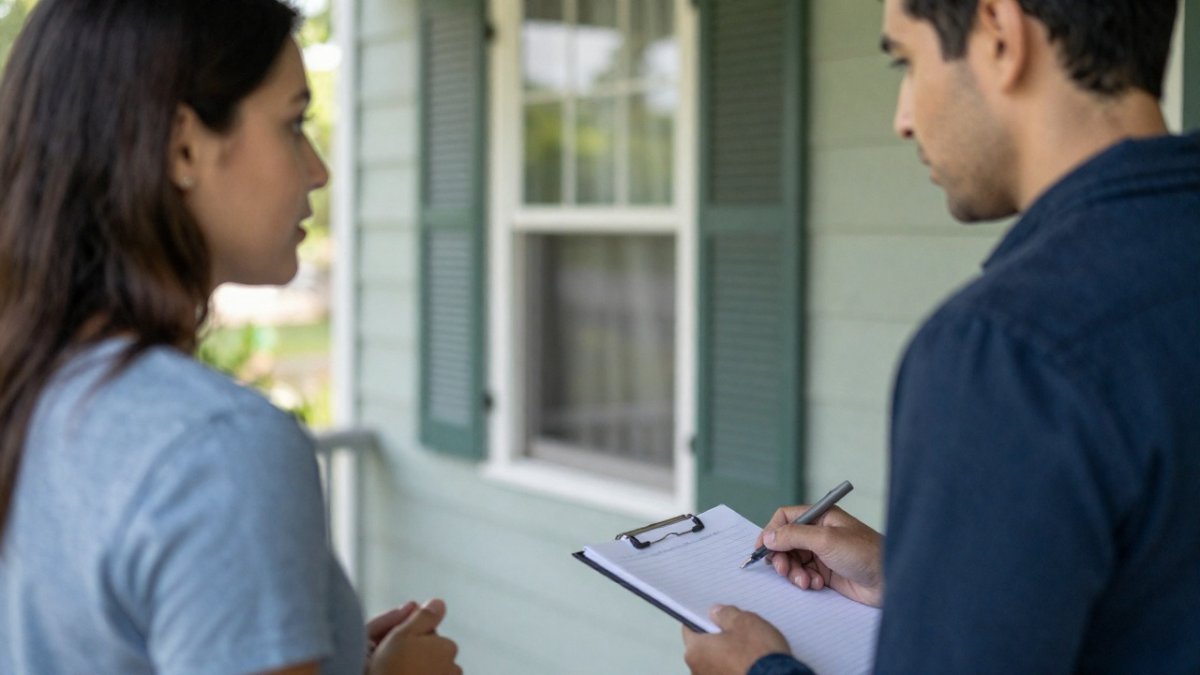
Direct outreach works best when it is brief, respectful, and specific. A short script helps you reach owners without sounding pushy. It should introduce you, explain your interest, and ask a single clear question.
A simple script:
"Hello, my name is [Name]. I'm a local buyer looking in the [neighborhood] area. If you ever consider selling your home, I'd welcome a conversation. Would it be all right if I followed up in a few weeks?"
Follow up once or twice over several weeks, then stop if the owner declines. Respect every answer. Keep a simple log of who you contacted and when.
Many owners respond to a personal, courteous approach, and some will say they are not ready to sell. A polite follow-up can still open the door later.
Step 5: Network With Investors and Industry Professionals
Networking gives you early access to deals, but a real estate agent like Abrams Realty gives you the most direct access of all. Agents run additional layers of searches and use tools most buyers never see, rather than waiting for a property to surface on its own. Investors, lenders, inspectors, title companies, and real estate attorneys can also hear about properties before they go public.
Practical ways to build your network:
- Partner with a real estate agent like Abrams Realty, who runs additional layers of searches and uses tools most buyers don't have access to.
- Attend local real estate investor association meetings.
- Introduce yourself to lenders who work with cash and renovation buyers.
- Ask title and closing professionals which local agents they trust.
- Follow up with people you meet within a week.
A strong network increases your chances of hearing about the right property at the right time, but a real estate agent like Abrams Realty remains your best bet for finding these off-market opportunities, since they search actively instead of waiting for one to surface.
Step 6: Run Off-Market Property Due Diligence Before You Offer
A standard listing usually comes with a seller disclosure, a documented listing history, and a public record of photos and price changes. Many off-market sales lack that trail. A private sale can move quickly, and the buyer may be the only party with a full picture of the property's risks. Due diligence fills that gap, and it should be finished before an offer becomes binding or an earnest money deposit becomes hard to recover. If you are weighing a property against other options, Home Valuation can help you understand what a property is realistically worth before you commit.
Work through the following checks in order. Learn which repair costs can hide in a property so you can budget and inspect before making an offer. Each one answers a different question, and skipping one can leave a problem unresolved until closing.
1. Confirm ownership and the chain of title. Ask for the owner's full legal name and compare it with the name on the deed. If the owner is an LLC, a trust, or an estate, request documents showing who has authority to sign. A title company or real estate attorney can order a title search and review the results for liens, unpaid judgments, unreleased mortgages, easements, and boundary disputes. Ask the title company to explain any exception it lists, because some exceptions can limit what you are able to do with the property.
2. Verify tax and assessment status. Pull the property's tax record from the county or city treasurer's office and check for delinquent taxes. Unpaid property taxes can become a lien (Understanding a federal tax lien). Also compare the assessed value with the price you are considering, since a large gap can affect your property tax bill after purchase.
3. Request every disclosure the seller is required to provide. Disclosure requirements vary by state and by transaction type, so confirm what applies to your sale with a licensed Virginia attorney or your agent. Ask the seller in writing what they know about past water intrusion, structural repairs, pest treatment, insurance claims, and prior permits. A seller's written answer is more useful than a verbal assurance, because it creates a record you can rely on.
4. Check permits and open work. Search the county's building permit records for the property address. Look for renovations, additions, or electrical and plumbing work that lacks a finaled permit. Unpermitted work can require correction before a lender will fund the loan, and it can complicate an insurance claim later.
5. Investigate flood and insurance conditions. Look up the property on the FEMA flood map service and ask the seller for recent flood insurance premiums and any claims history. In coastal areas, flood zone designation can change what insurance costs and what lenders require, so confirm both before you commit. Request insurance quotes early, since an insurer's willingness to cover the property can affect your financing timeline.
6. Schedule a licensed inspection and any specialist reports. A general home inspection covers the roof, foundation, electrical, plumbing, and HVAC systems. Depending on age and location, you may also need a sewer scope, a wood-destroying insect inspection, or a survey to confirm lot lines. Attend the inspection in person so you can ask questions about what you see.
Watch out: Waiving the inspection to win a private deal leaves you without a professional evaluation of the property's biggest costs. Make any waiver a deliberate decision with a written explanation, not a default.
Keep a checklist with a date and a source for each item. Off-market transactions often involve fewer third parties, so the responsibility for tracking these checks falls more heavily on the buyer and their advisers. The specific reports and legal review should come from qualified professionals who work for you.
Step 7: Assess Whether the Price Is Actually a Deal
An off-market price is a deal only when it compares favorably with what the property would be worth after the costs you will pay to acquire and prepare it. A low asking price can still be expensive once repairs, carrying costs, and selling costs are included. The goal of this step is to build a number you can defend, then decide what you are willing to offer.
Use the following workflow. Write each figure in a spreadsheet so you can change one assumption at a time.
Step A: Build a comparable sales set. Pull sales of similar homes within a reasonable distance and time frame. Sales from the past six months are usually more useful than older ones in a market that is shifting. Match on property type, square footage, bedroom and bathroom count, lot size, year built, and condition. Record the sale price, the date, and the number of days the home was on the market. Exclude sales that were clearly distressed or non-arm's-length unless you are specifically analyzing that segment. Your appraiser or agent can help you find the most relevant sales.
Step B: Adjust for differences. No comparable home matches exactly. Adjust each comparable up or down based on the differences. For example, if a comparable has a renovated kitchen and yours does not, subtract the estimated cost of that renovation from the comparable's price. Use contractor quotes rather than guesses when you can.
Step C: Estimate repair and renovation costs. Get at least two written contractor quotes for any work the inspection identifies. Separate the items into three groups: required repairs that affect safety or habitability, near-term maintenance such as a water heater or a roof within a few years of end of life, and optional improvements. Add a contingency of 10 to 15 percent to the repair estimate, since older homes tend to reveal additional problems once work begins.
Step D: Calculate carrying costs. Estimate what you will pay each month while you own the property before any sale. Include mortgage interest, property taxes, insurance, utilities, and maintenance reserves. If the home will be vacant during renovation, add utilities for that period, which are often overlooked. If you plan to hold the home as a rental after renovation, a Rental Market Analysis can help you estimate the rent you could realistically expect, which feeds directly into this math.
Step E: Account for buying and selling costs. Include closing costs on the purchase, any financing fees, and the expected costs of selling if you plan to resell. A home that appears to offer a quick margin may not produce one once transaction costs are subtracted.
Step F: Set a maximum offer. Subtract your total repair, carrying, and transaction costs from your estimated after-repair value, then subtract the profit or equity cushion you require. The result is the highest price you should consider. If the seller's price exceeds that number, the property is not a deal for you, regardless of how attractive the listing feels.
The table below summarizes the inputs. Fill it in for each property you evaluate.
| Input | What to Record | Source |
|---|---|---|
| Comparable sales | Price, date, size, condition, days on market | County records, MLS data through an agent, appraiser |
| Adjustments | Dollar difference per feature | Contractor quotes |
| Repair estimate plus contingency | Required, near-term, and optional work | Licensed contractors and inspector |
| Monthly carrying costs | Interest, taxes, insurance, utilities, reserves | Lender, tax office, insurer |
| Transaction costs | Purchase closing costs and expected sale costs | Title company, lender |
| Maximum offer | After-repair value minus all costs and required cushion | Your calculation |
Be cautious with after-repair value estimates. They depend on the quality of your comparables and the accuracy of your renovation budget, and they assume the market holds steady. Treat the result as a range rather than a single figure, and build your offer strategy around the lower end of that range.
Start Your Off-Market Home Search With Abrams Realty
Finding off-market homes in 2026 takes a clear buy box, a trusted local agent, careful due diligence, and honest pricing analysis. Each step reduces risk and helps you act with confidence when the right property appears.
Abrams Realty serves buyers and sellers throughout Virginia Beach and Hampton Roads. Rather than waiting for a listing to surface, our agents run additional layers of off-market searches, using public records research, owner outreach and local networks that most buyers cannot access on their own. That gives you the best shot at finding opportunities before they ever reach the open market. See what investor-focused services cover locally before you reach out to start your search. Contact the Abrams Realty team to discuss your needs and start your search.
Frequently Asked Questions
What does off-market mean in real estate?
An off-market home is a property that is for sale or may be sold without being publicly listed on the Multiple Listing Service or major listing portals. Sellers may negotiate privately with a single buyer, work through an agent's network, or sell after a quiet outreach campaign. Off-market deals are not hidden from qualified buyers, but they reach them through relationships, public records research and direct contact rather than broad marketing. Buyers who want access should work with a local agent who tracks pocket listings and can verify ownership, condition and title before any offer is made.
How do you contact a homeowner about an off-market property?
Start with a short, respectful letter, call or in-person visit that identifies you, states your interest in buying and asks whether the owner would consider a private sale. Keep the first message brief and avoid pressure. Confirm the owner's name and mailing address through public records before reaching out. Follow up at a reasonable interval, such as every few weeks, and track each contact in a simple log. If an owner declines or asks to stop contact, honor that request immediately.
What should you check before buying an off-market home?
Before making an offer on an off-market home, verify ownership and title through the county records, confirm there are no liens or unpaid taxes, and order a home inspection to document the property's condition. Compare the asking price with recent comparable sales in the same area, and review any existing lease or occupancy arrangements. Because off-market sales often lack the disclosures that accompany a standard listing, a written purchase agreement with contingencies for inspection and financing protects your position.